

Walk into any serious steakhouse and you'll notice something. The Porterhouse commands respect. It sits at the top of the menu, priced accordingly, ordered by those who know exactly what they want. There's a reason the Porterhouse is the king of steaks.
This cut delivers everything you could ask for in one magnificent piece of beef. You get two premium steaks in one, a serious size and flavor that speaks for itself. When you've invested in quality cookware and sharpened your skills in the kitchen, the Porterhouse rewards that expertise. It's the cut that separates casual grill masters from true steak enthusiasts.
1. You Get Two Premium Cuts in One
The Porterhouse gives you the best of both worlds. On one side of the T-bone, you have a generous Strip of steak. On the other side, a thick, tender Filet mignon. Most steaks force you to choose. The Porterhouse refuses to make you pick.
The Strip side provides a robust, beefy flavor with just enough marbling to keep things interesting. It has an incredible texture and character. Then you flip to the Filet side and experience something completely different. Buttery texture. Subtle flavor. Melt-in-your-mouth tenderness that Filet lovers chase.
This combination offers variety in a single meal. Your first few bites might come from the Strip. Then you switch to the Filet for contrast. Back and forth. Each bite offers something new.
You don't need to order two different steaks to get this experience. The Porterhouse handles it all. For someone serious about beef, this versatility matters. You can explore different flavors and textures without leaving a single cut behind.
2. Size That Actually Satisfies
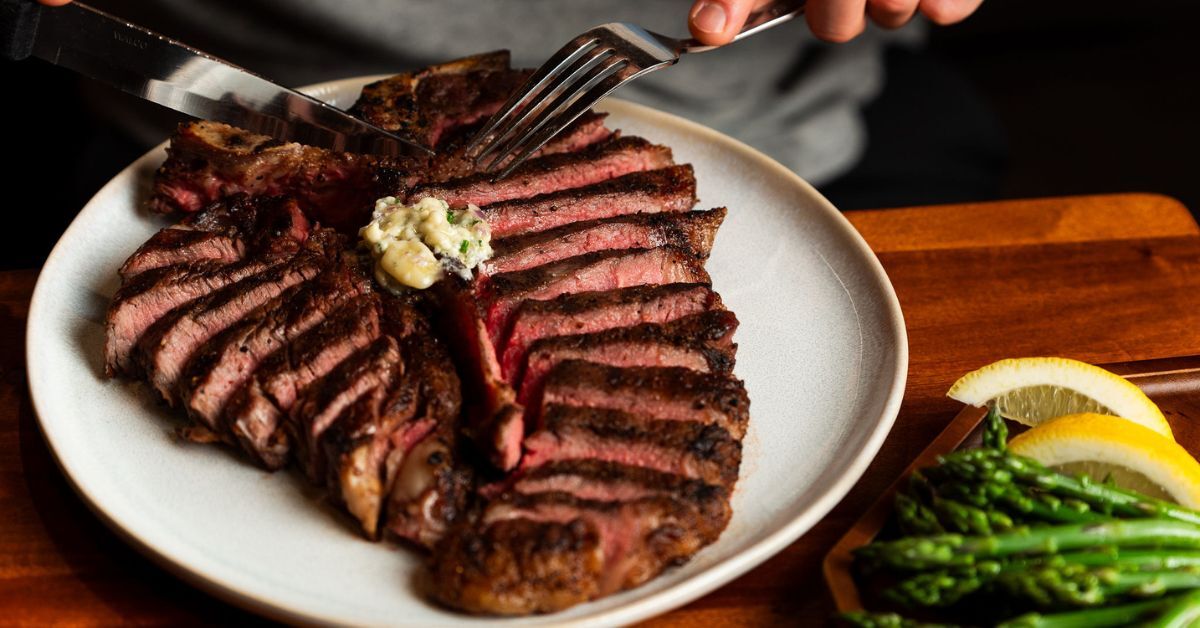
Porterhouse steaks don't mess around with portion sizes. USDA standards require the Filet portion to measure at least 1.25 inches in diameter. Most quality Porterhouses come in well above that minimum.
This size means you can cook the steak properly. Thin cuts leave no room for error. They overcook in seconds. A thick Porterhouse gives you control. You can develop a proper crust on the outside while keeping the interior exactly where you want it. Medium-rare throughout, with a caramelized exterior that adds depth to every bite.
The substantial size also means this steak holds heat for longer. You're not racing against the clock to finish before everything goes cold. You can take your time. Appreciate each section. Let the flavors develop on your palate.
When you've spent money on premium Angus beef, you want the eating experience to last. The Porterhouse delivers extended enjoyment. It's a steak that turns dinner into an event.
3. The T-Bone Makes Temperature Control Easier
That T-shaped bone running through the center does more than look impressive on your plate. It conducts heat differently from muscle tissue. This conduction creates natural temperature zones across the steak.
The bone acts as an insulator for the meat closest to it. The areas near the bone cook slightly slower than the outer edges. For experienced cooks, this slower cooking near the bone becomes an advantage.
You can position the steak on your grill or in your pan to take advantage of this temperature variance. Want the Strip a little more done than the Filet? Adjust your heat source accordingly.
The bone also adds flavor while cooking. As the steak heats up, the marrow inside the bone warms and enriches the surrounding meat. You get a deeper, more complex beef flavor than you would from a boneless cut.
This enhanced flavor doesn’t require adding ingredients or using complicated techniques. The bone does the work naturally. Here's what the bone brings to your cooking process:
- Natural heat regulation that prevents overcooking
- Enhanced flavor from warming marrow
- A visual cue for proper positioning during cooking
- Structural support that makes flipping easier
Your expensive cookware and precision tools work even better when you're cooking a bone-in steak. The bone gives you more control over the final result.
4. Marbling Creates Flavor Without Excess Fat
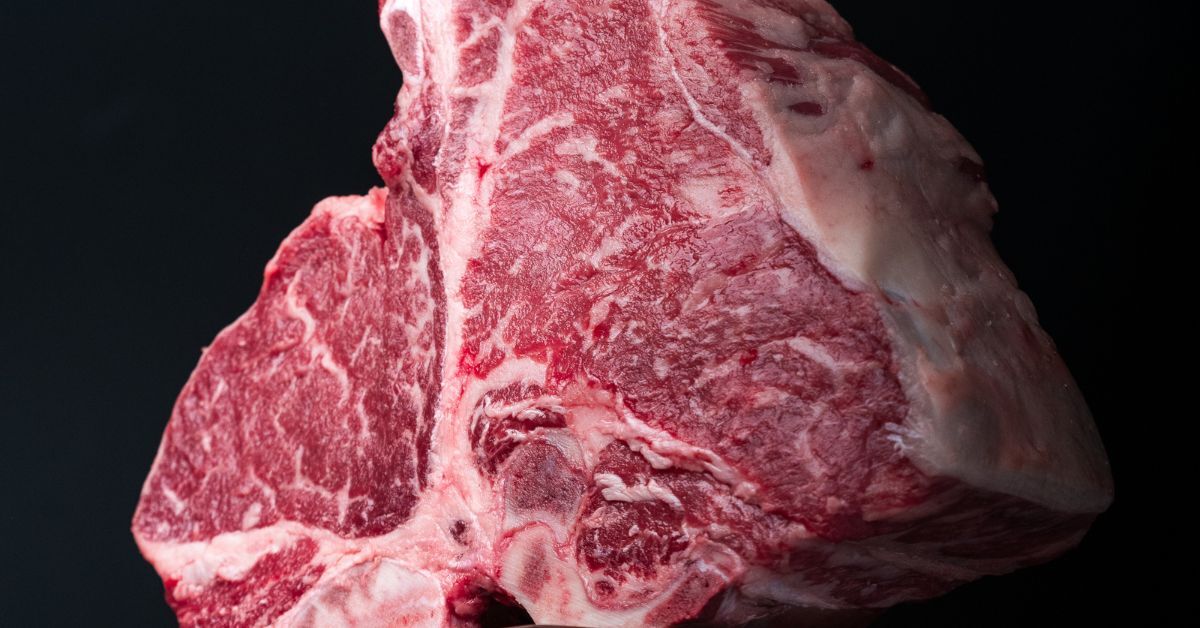
High-quality Angus beef stands out for its superior marbling. Those white flecks distributed throughout the red muscle aren't just fat. They're flavor insurance. When you cook a well-marbled Porterhouse, that intramuscular fat melts. It bastes the meat from the inside.
This internal basting keeps the steak juicy without making it greasy. You don't end up with pools of rendered fat on your plate. Instead, the melted marbling integrates completely into the meat. It enhances texture, amplifies the natural beef flavor, and creates that signature richness people associate with premium steakhouse experiences.
The Strip side of your Porterhouse typically shows more marbling than the Filet side. This difference in fat distribution gives you options. If you want the intensity of well-marbled beef, you focus on the Strip. If you prefer leaner meat, you move to the Filet. Both sections benefit from the cooking process, but they offer distinct experiences.
Quality marbling also enables you to cook your Porterhouse with minimal additions. Good beef doesn't need much. Salt, pepper, high heat. That's often enough. The marbling provides all the richness and moisture the steak needs. When you source from The Linz Shop, you’ll get marbling that elevates the entire cut and brings out bold flavor every time you fire up the grill.
5. Presentation That Matches Your Standards
You've invested in your kitchen. You’ve got professional-grade knives, cast iron that weighs more than some people’s gym equipment, and precision thermometers that read to a tenth of a degree. The Porterhouse matches that level of commitment.
This steak looks impressive. The T-bone creates natural visual drama. The size demands attention. When you bring a properly cooked Porterhouse to the table, people notice. It signals that you know what you're doing. You're not experimenting. You're executing.
A T-bone offers plenty of creative ways to plate and serve your masterpiece. You can slice the Strip and Filet off the bone and arrange them separately on the plate. This presentation showcases both cuts and makes it easier for your guests to appreciate the differences between them. Or you can serve it caveman-style, bone-in, letting everyone cut their preferred pieces directly from the T-bone.
Either approach works because the Porterhouse has inherent visual appeal. You don't need garnishes or elaborate plating to make it look special. The steak does that itself. For someone who's moved past entry-level cooking and wants ingredients that match their skill level, the Porterhouse delivers every time.
The Porterhouse Stands Alone
The Porterhouse is the king of steaks for good reason. It combines two premium cuts, delivers substantial size, uses the bone for better control during cooking, features marbling that naturally enhances flavor, and presents beautifully without extra effort. When you know your way around quality beef and have the kitchen tools to handle it properly, this cut rewards your expertise.
Whether you're shopping for a special occasion or want the best steak available, the Porterhouse should be your first choice. Check out options like a Porterhouse steak for sale from The Linz Shop to experience a steakhouse-level meal right at home. Serious beef lovers will never stop coming back to this ultimate expression of steakhouse perfection.